Timber-based construction, refurbishment and superelevation scenarios

DESCRIPTION:

Timber-based scenarios for new and existing buildings to enhance the use of wood as a circular construction-renovation material combined with forefront sustainable and energy saving technologies, nature-based solutions, and compound performance and comfort monitoring systems. 

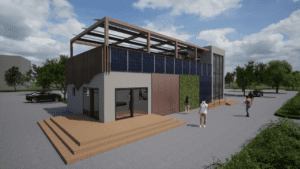
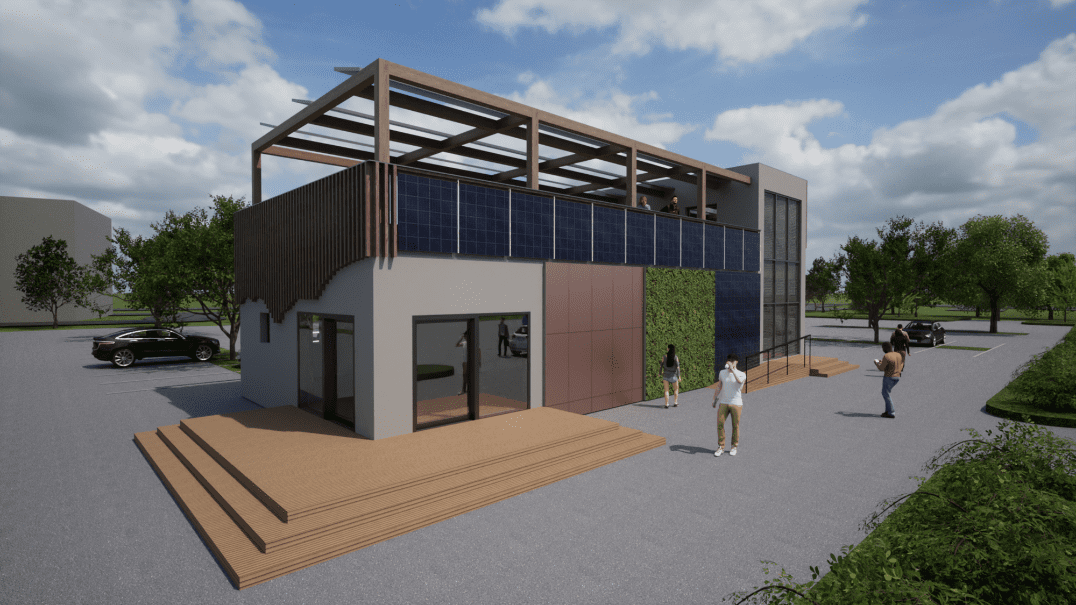
The first scenario is the construction of a new wooden-based positive energy building located in in an area currently used as a parking lot. The new building has been conceived as a multifunctional hub with integrated services.

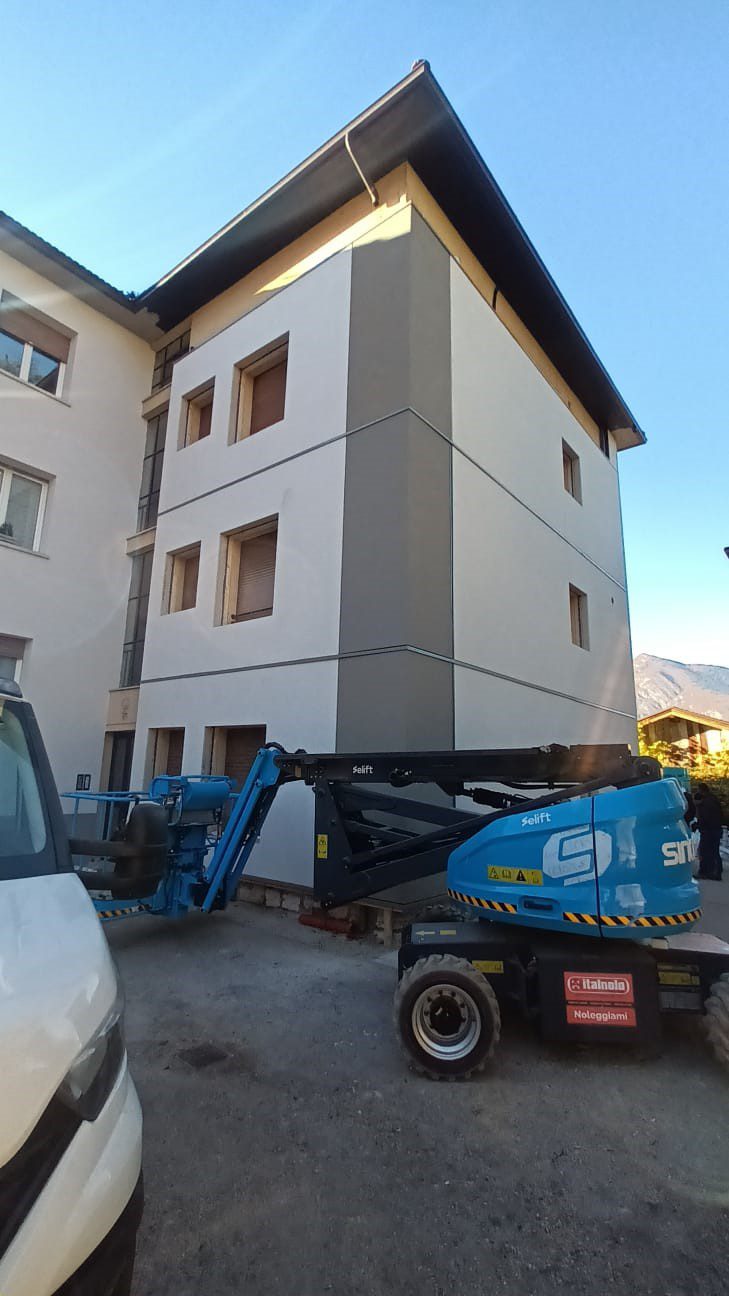
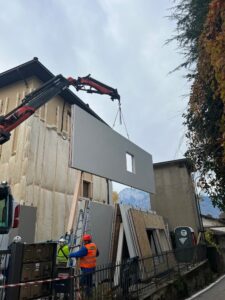
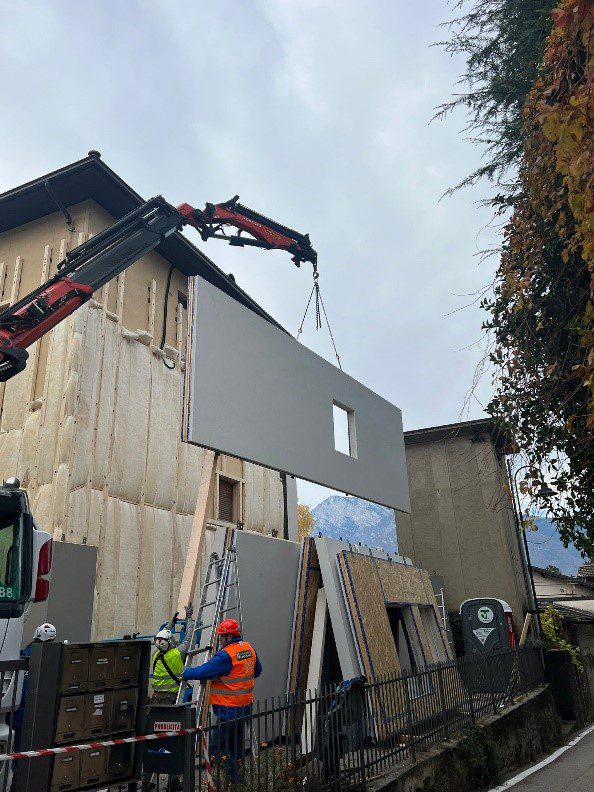
The second scenario is the architectural renovation and energy refurbishment of existing buildings using timber. The scenario consists of testing the prefabricated wooden-based panel – called “Renew Wall” (RW), a modular system and wooden-based retrofit kit conceived to be easily applied on existing buildings.

VALUE

Both scenarios offer an alternative to as-usual construction and renovation works and address the issue of environmental impacts of buildings. Timber-based interventions allow to exploit the advantages of off-site manufacturing, including the design and delivery of accurate and optimized structural components that only needs to be assembled and installed on site. Compared to business-as-usual solutions, this leads in principle to a reduced and more predictable construction/renovation time, combined with limited impact and inconvenience of works on end-users, such as building occupants, and the surrounding environment (i.e., use of scaffoldings, less noise and dust produced, etc.). Moreover, both scenarios enable to address sustainability in a comprehensive way, combining the well-known features of wood as a construction material (CO2 sequestration and storage) with optimized energy performance, thermal comfort, nature-based solutions, and RES integration – the latter in relation to the new building. Furthermore, the new building’s structure, which is based on square modules, enables long-term re-usability and possible redesign aspects. Modularity coupled with a flexible layout for the internal space of the building could prove a useful resource for future configurations of the hub and its functions and for adding new parts in both directions and in principle also in elevation.
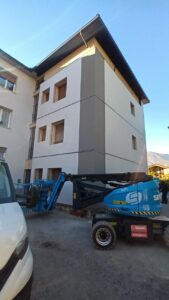
Before and after the installation of the “Renew Wall” retrofit kit in Povo.

APPLICATION

The solutions developed show strong scalability potential thanks to their modular design, which allows adaptation to different urban contexts, including commercial and tertiary areas. Innovative façade systems can be tailored case by case by comparing thermal and energy performance and selecting the most suitable solution for each use and setting. At district scale, replication is supported by urban regeneration plans approved by the Municipality of Trento, notably in Piedicastello and the nearby Italcementi area. Project outcomes can inform the design of new buildings planned for mixed commercial and tertiary uses. Renovation solutions also offer high replication potential in residential districts with inefficient housing stock. By relying on off-site manufacturing and prefabricated timber components, standardized renovation kits can be deployed efficiently at scale, especially when combined with existing refurbishment incentives. Finally, the completed large-scale installation of the Renew Wall system in Povo demonstrates how a One-Stop-Shop approach can help aggregate demand and supply, enabling district-wide renovation of mid-rise apartment buildings from the 1960s–70s using prefabricated solutions.

POTENTIAL IMPACT

Thanks to:

FUNDING:

Subscribe to our Newsletter

Want to know more about the new generation of climate positive circular communities (CPCC)? Sign up to our bi-annual newsletter (no spam guaranteed)!