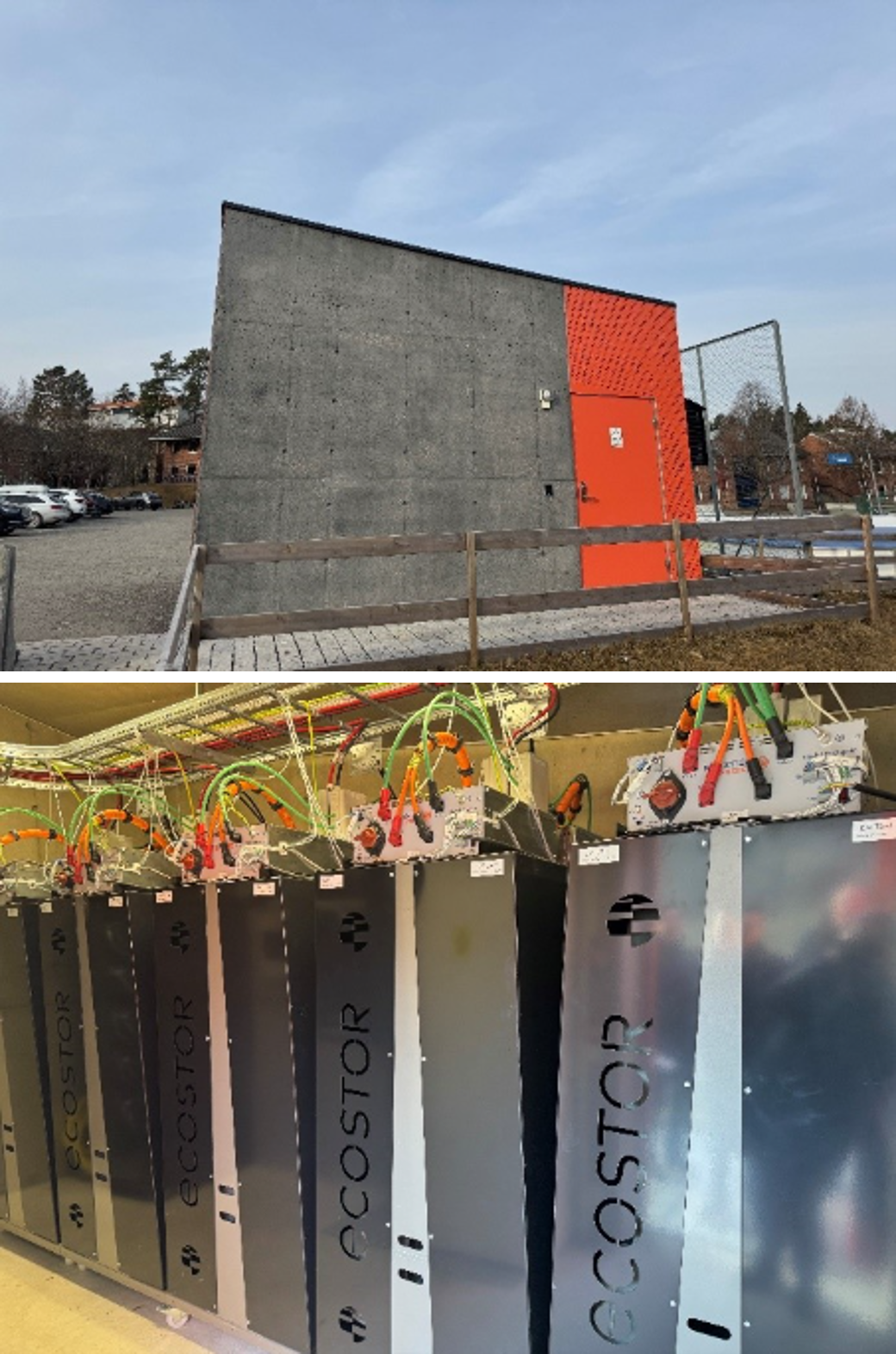
Local energy storage systems using recycled electric vehicle batteries give a second life to batteries that are no longer suitable for transport. Combined with solar panels, these batteries store excess renewable electricity and release it when energy demand is higher. The systems can be installed in a wide range of buildings, from schools and offices to residential developments, helping to create more flexible and self-sufficient local energy systems.
6-7 October 2026,
Trondheim, Norway
Join us for our Final Conference Climate Positive Circular Communities
Learn More
•
6-7 October 2026,
Trondheim, Norway
Join us for our Final Conference Climate Positive Circular Communities
Learn More
•
6-7 October 2026,
Trondheim, Norway
Join us for our Final Conference Climate Positive Circular Communities
Learn More
•
6-7 October 2026,
Trondheim, Norway
Join us for our Final Conference Climate Positive Circular Communities
Learn More
•
6-7 October 2026,
Trondheim, Norway
Join us for our Final Conference Climate Positive Circular Communities
Learn More
•
6-7 October 2026,
Trondheim, Norway
Join us for our Final Conference Climate Positive Circular Communities
Learn More
•
6-7 October 2026,
Trondheim, Norway
Join us for our Final Conference Climate Positive Circular Communities
Learn More
•
6-7 October 2026,
Trondheim, Norway
Join us for our Final Conference Climate Positive Circular Communities
Learn More